Pan di Sorc
Pan di sorc
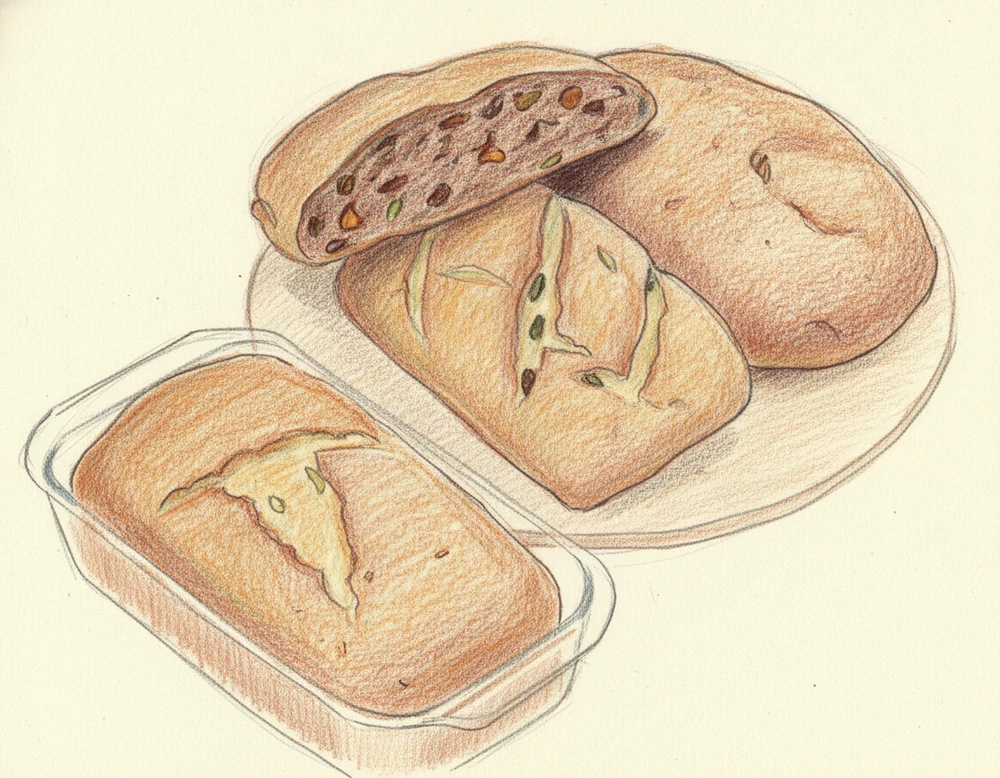
Anyone travelling from Italy into central Europe came through Gemona, and under the Habsburgs these valleys sent seasonal builders, artisans and skilled workers up to Vienna. They brought habits home, and pan di sorc is thought to be one of them: a sweet spiced bread made for feast days and above all at Christmas. Every family had its own version, always on maize flour (sorc in dialect) with rye and wheat and dried figs, usually raisins and fennel seed too.
Designation
- Certification
- Slow Food Presidium
- Category
- Bread, pastry, cakes, confectionery and biscuits
Where it is made
Artegna, Buja, Gemona del Friuli, Majano, Montenars and Osoppo comuni (province of Udine)
How it is made
The loaves are round and only a few centimetres high, with a dark, intensely fragrant crust over a yellow crumb that smells of polenta. They were baked in the village oven or in the ovens of the better-off, with some loaves sold or handed to the oven's owner as payment. Eaten sweet or with cured meats; after two or three days it is dipped in milk or worked into crafut.